As one of the fastest growing sports in the world, you’ve probably heard of padel by now. With the sport’s surge in popularity, courts are being built at a rapid pace. In the UK alone, the number of padel courts has more than doubled since the end of 2024, transforming the sport from a niche pastime into a mainstream attraction.
What is Padel?
Padel is an exciting combination of tennis and squash. Invented in Mexico in 1969 by Enrique Corcuera, the sport incorporates elements of platform tennis and is played on an enclosed court surrounded by glass walls and metallic mesh.
Typically played in doubles, padel uses a similar scoring system and ball to tennis but on a smaller court, creating a fast-paced, social game that is easy to learn.
What Happens to a Padel Court During Play?
Whether indoors or under a covered structure, padel courts can become surprisingly warm when players are on the court.
Padel is a high-energy sport that involves constant movement and rapid changes of direction, creating a full body workout. As players exercise, they generate body heat and release moisture into the air through breathing and sweat. The more players using a facility, the greater the heat and humidity build-up.
Padel courts are often enclosed by glass walls and netting, which can restrict natural airflow. During busy periods – such as evenings, weekends, tournaments, and other club events – multiple occupied courts can create a noticeable increase in temperature and humidity throughout the facility.
Without adequate ventilation, warm air can accumulate and become trapped within the space. Players may begin to feel uncomfortable, fatigued, and overheated, which can affect both performance and enjoyment of the game.
Why Ventilation and Airflow Matter
A temperature rise is not the only issue.
As occupancy increases, so do humidity levels and carbon dioxide concentrations. Combined with heat generated by physical activity, poor airflow can create a stuffy and uncomfortable environment that feels difficult to play in for extended periods.
What’s more, different plastic and rubber materials in sporting equipment and chemicals in sanitation products can have a negative effect on air quality, introducing contaminants into an already stuffy room. As a result, respiration can quickly be put at risk on the court.
Good ventilation helps to:
- Remove excess heat from the playing area
- Reduce humidity and condensation
- Limit the contaminants you breathe in
- Introduce fresh outdoor air
- Improve overall comfort for players, spectators, and employees
Maintaining comfortable conditions can help increase court usage and encourage players to stay longer.
How Can Padel Facilities Stay Cool?
There is no one solution for cooling a padel court; the most suitable approach depends on factors from occupancy levels to climate to whether the facility is fully enclosed, semi-open, or outdoors.
Common methods include:
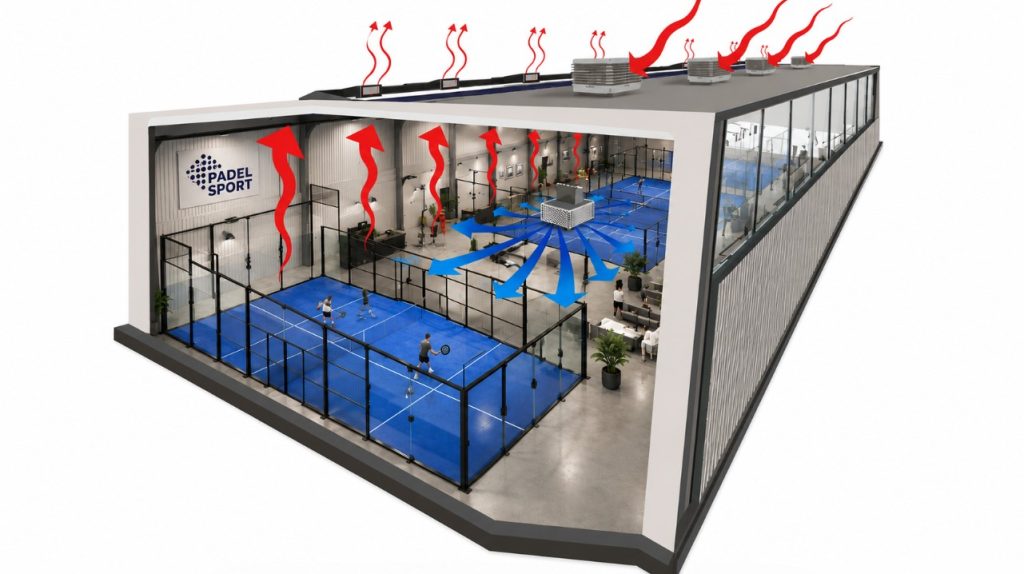
- Natural Ventilation – If possible, opening doors or windows can help encourage airflow and remove accumulated heat. While this can be effective in some settings, natural ventilation alone may struggle to keep up with busy periods or hot weather.
- Mechanical Ventilation – Fans and ventilation systems can improve air movement throughout a facility, helping to prevent stagnant air and distribute fresh air more effectively. This can make a noticeable difference to comfort levels, particularly when multiple courts are in use.
- Air Conditioning – Refrigerated air conditioning can provide precise temperature control in fully enclosed buildings. However, these systems often require a tightly sealed environment to operate efficiently and can become costly to run in larger sports halls.
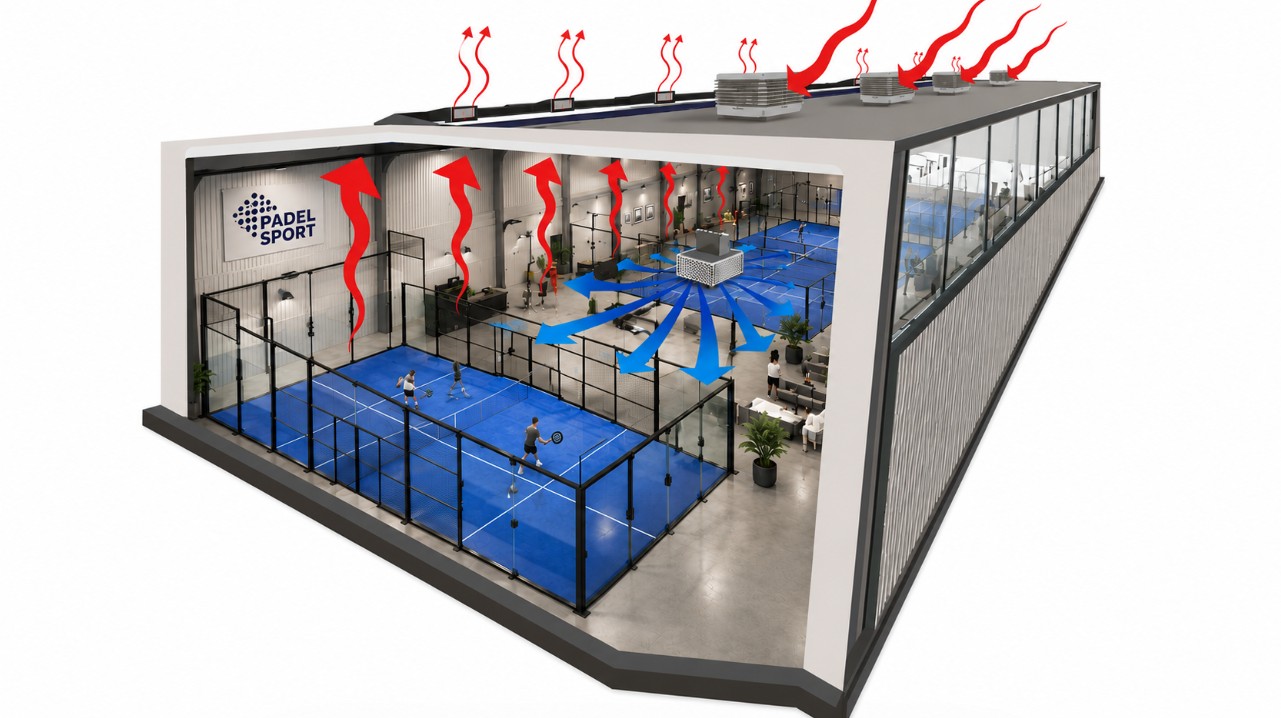
- Evaporative Cooling – Evaporative cooling works by drawing warm, outside air through water-soaked cooling pads before distributing the cooled air into the space. As well as reducing temperatures, it continuously introduces fresh air and promotes airflow throughout the facility.
For many sports venues, particularly those with large open areas or semi-open structures, evaporative cooling can offer an effective way to improve comfort without sealing the building.
Why Evaporative Cooling Works Well in Padel Courts
Padel facilities often feature large volumes of space, high occupancy levels, and frequent movement of people between courts and other shared areas. Maintaining airflow is therefore just as important as reducing temperature.
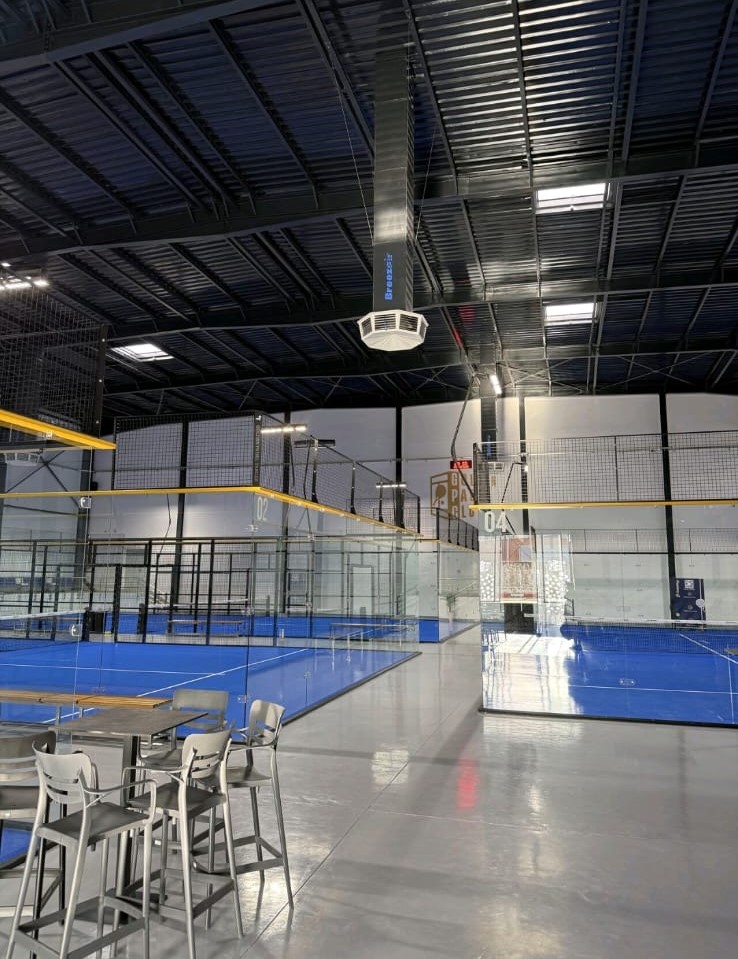
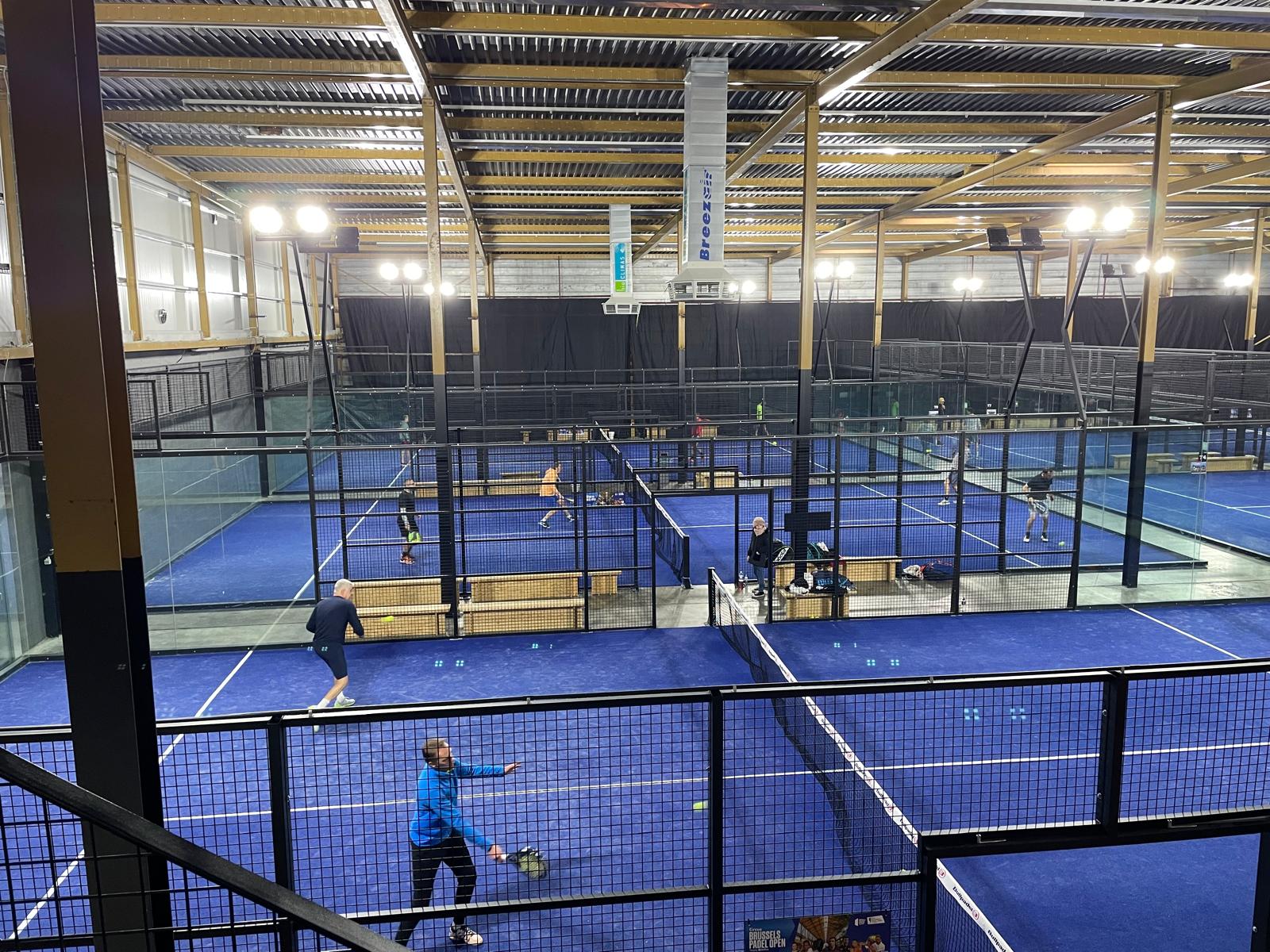
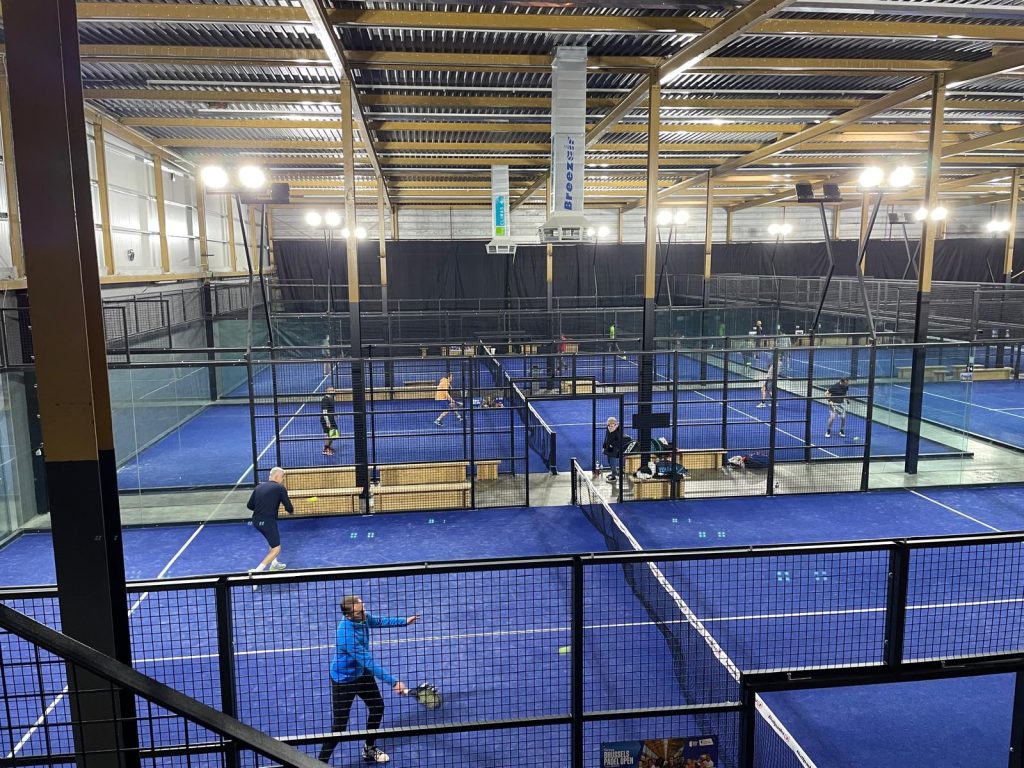
Direct evaporative cooling systems, such as Breezair, are designed to operate in exactly these conditions. Rather than recirculating indoor air, they continuously introduce fresh, cooled air, removing heat and stale air from the building.
Breezair evaporative cooling can reduce temperatures by around 5-10°C, helping create a more comfortable environment for players throughout the summer months.
Keep Players Comfortable
As padel continues its rapid growth, creating a comfortable playing environment is key for clubs and sports facility managers.
Effective ventilation and cooling maximise court usage and customer satisfaction. With the right cooling solution in place, players can stay focused on their game and not on the heat.